Julian Le Grand
Economist and author of 'The Economics of Social Justice'
Economist and author of 'The Economics of Social Justice'
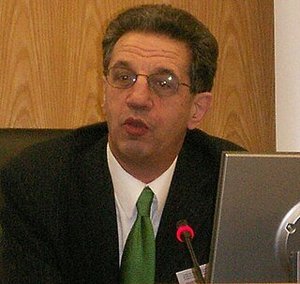
An English economist, significant contributions centered on social justice, welfare economics, and public policy. Developed the concept of 'contractualism' which examines the moral foundations of economic policies. Served as a professor at the London School of Economics and was an advisor to the UK government, influencing health and social care policies. Authored several influential works, including 'The Economics of Social Justice' and 'The Public Choice Approach to Public Policy'.
Authored 'The Economics of Social Justice'
Influenced UK government health policies
An influential literary figure, Brink's work focused on the social and political issues of apartheid-era South Africa. Brink wrote several novels, plays, and essays that explored themes of identity, resistance, and the human condition. Among his most significant works are 'Cape of Storms' and 'A Dry White Season', the latter of which was adapted into a film. His literary contributions earned him a prominent place in South African literature and international recognition.
Continue ReadingA historian and curator focused on Scottish history, significance in curating historical collections was notable. Led the National Museum of Scotland throughout various enhancements and expansions. Prioritized public engagement and education through exhibitions and events. Worked to preserve Scottish heritage via collaborative projects.
Continue ReadingContributions include investigations in the field of carbohydrates and organic chemistry. Discovered and described the process of hydrolysis of starch and cellulose. Developed methods for extracting and utilizing cellulose from various plants. Published significant works detailing botanical products and their chemical properties.
Continue ReadingBorn in 1555, served as a general and administrator in Ireland during the late 16th century. Played a key role in the English efforts to subdue the Irish during the Nine Years' War. Appointed as the president of Munster, he worked towards consolidating English control over the region. Contributed to military campaigns and engagements, strengthening English influence in Ireland until his death in 1629.
Continue ReadingBorn in 1871, this figure was an American painter who specialized in landscape art. His style reflected the influence of the American Impressionist movement, and he was active in several art circles. The painter's works often showcased the beauty of nature and rural scenes, drawing inspiration from the changing light and atmosphere. He was a participant in the annual exhibitions of the Society of American Artists and the Pennsylvania Academy of Fine Arts. His connection to the scenic landscapes of the American East was significant, which influenced many of his significant works throughout his career.
Continue ReadingBorn in Hungary, an academic focused on game theory, utility, and social choice theory. Emigrated to the United States after World War II and continued work in economics. Received the Nobel Memorial Prize in Economic Sciences in 1994 for contributions to analyzing cooperative games and bringing psychological insights into economic thinking.
Continue Reading